Sweat Signals:
What Your Skin Knows Before You Do
Chang-Ho Han, KIST Europe
Kurz und Bündig
Skin-worn microfluidic biosensors collect sweat or tears to measure glucose, electrolytes, lactate, pH, or inflammation—without needles. They use enzyme-coated or colorimetric sensors, flexible substrates, and wireless data transfer. Applications span diabetes, sports, wound care, and stress monitoring. Challenges include calibration, sample volume, sensor stability, power supply, and privacy.
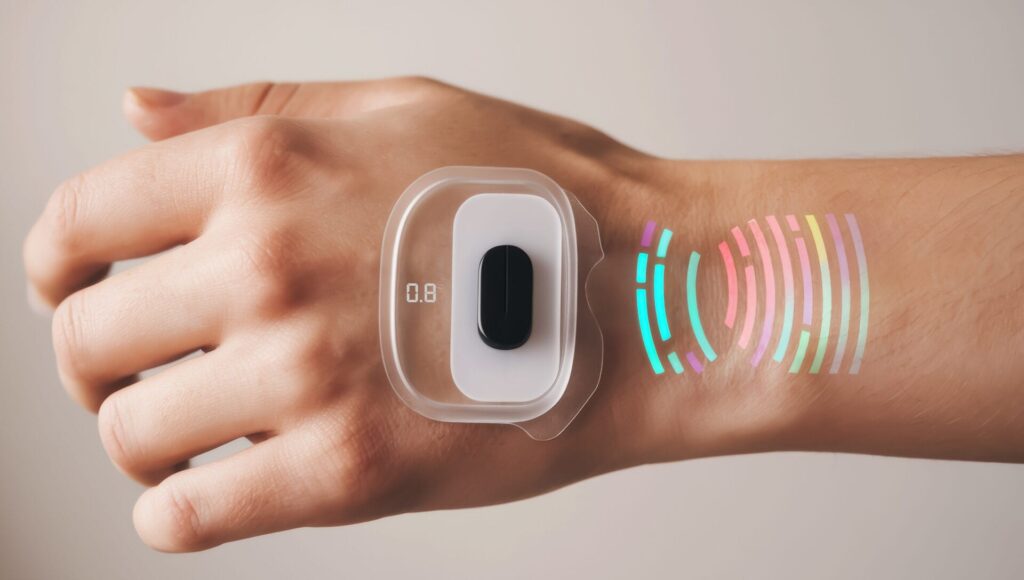
A patch the size of a coin sits quietly on the skin. No pain, no wires, no lab visits—yet it continuously monitors what’s happening inside the body. Glucose, hydration, even signs of infection are tracked in real time, through sweat or tears. It sounds simple, almost invisible. But behind this ease lies a complex system of sensors, chemistry, and data. What does it take to bring such subtle technology to life—and into everyday healthcare?
In healthcare and personal wellness, a new generation of wearable biosensors is emerging that can analyze the body’s chemical signals through the skin [1]. These devices use microfluidic technology to capture and assess biomarkers from sweat, tears, or other skin-secreted fluids, without needles or lab tests. In doing so, they enable real-time health monitoring in a continuous and noninvasive manner. This article explores how these sensors function, their core components and applications, the challenges that remain, and the broader societal implications of their widespread adoption.
Biotechnological Components
Noninvasive microfluidic biosensors function as miniature „labs on the skin,“ integrating multiple technologies into a single wearable device. They combine several key components that work together to sample biofluids and detect target molecules:
- Microfluidic Channels: Tiny capillary networks are embedded in a flexible patch to wick sweat or interstitial fluid from the skin into the device [2]. These channels distribute minute fluid samples to different test chambers.
- Chemical Sensors: At the heart of the patch, sensor elements are tuned to specific biomarkers. For example, electrochemical sensors use enzyme-coated electrodes (such as glucose oxidase) that produce an electrical signal when a target analyte is present [3]. Colorimetric sensors use reagents that change color in the presence of certain ions or molecules (for instance, pH or chloride indicators) [4]. The resulting electrical or color changes correlate to the concentration of the analyte.
- Flexible Substrate and Adhesive: The device is built on a thin, bendable material (e.g. silicone or polyurethane) that conforms to the body. Skin-friendly adhesive ensures the patch stays on through movement and sweating without causing irritation. The flexibility and stretchability help maintain good skin contact and user comfort during daily activities.
- Electronics and Data: Many patches include tiny electronics for signal processing and wireless data transmission. A compact Bluetooth or NFC module transmits sensor readings wirelessly to a connected smartphone application [6]. Some designs are battery-powered while others harvest energy (using, for example, the phone’s NFC field or even biofuel cells that run on sweat lactate). The raw sensor signals are processed into meaningful readings and then displayed to the user via an app or onboard indicator, showing metrics like glucose level or hydration status in real time.
Applications
Due to their versatility, microfluidic biosensors are being developed and tested across diverse fields – from chronic disease management to athletic performance and advanced wound care. Notable examples include:
- Diabetes Management: A prominent goal is continuous glucose monitoring via sweat. For diabetic patients, a skin patch that tracks glucose levels could reduce the need for finger-prick blood tests [3]. Early prototypes have demonstrated that sweat glucose trends can reflect blood glucose changes, though calibration is required for accuracy.
- Sports & Fitness (and Beyond): Athletes and workers in extreme conditions can benefit from patches that monitor hydration and fatigue. Measuring electrolyte loss (sodium, potassium, chloride) in sweat helps determine when and what to rehydrate with, preventing dehydration and cramps. Likewise, tracking lactate levels gives insight into muscle fatigue and endurance limits [4]. Such wearable sweat sensors have been tested on endurance athletes to provide live feedback, and similar technology can alert soldiers or firefighters to early signs of heat stress before it becomes dangerous.
- Wound Care & Medical Diagnostics: Smart bandages with microfluidic sensors can detect signs of infection or inflammation in wound fluid. For example, a patch can monitor wound pH or the presence of bacterial enzymes to signal if an infection is developing, without removing the dressing [9]. More generally, on-skin biosensors could aid in diagnostics by measuring biomarkers for disease: researchers are investigating patches for monitoring drugs (like lithium levels) or detecting stress hormones and immune markers noninvasively.
Challenges
Despite their promise, skin-interfaced biosensors face several technical and practical hurdles that must be addressed before they can achieve mainstream integration:
- Calibration & Variability: Readings from sweat or other skin fluids must be calibrated against blood values. Sweat rates and individual differences can dilute or skew measurements, so algorithms are needed to interpret the data accurately [5]. Ensuring consistent accuracy across different people and conditions is an ongoing challenge.
- Sample Volume: These devices rely on the body’s natural fluid secretion. If a person isn’t sweating much, it can be hard to get enough sample for a reliable measurement. Similarly, tear-based sensors (like experimental smart contact lenses) face issues when tear fluid is scant. Methods to stimulate sweat production or operate with ultra-small volumes are being developed.
- Sensor Stability: Over time, biosensor performance can degrade as reagents deplete or sensor surfaces become fouled through repeated exposure to biofluids. Enzymes may lose activity and electrodes can become less responsive. Maintaining calibration and sensitivity over hours or days of wear is difficult [9]. New materials and coatings are being studied to extend sensor lifespan and reduce biofouling.
- Power & Communication: Providing power to on-skin sensors without sacrificing comfort is a technical hurdle. While simple patches rely on color change (needing no power), advanced ones with electronics require energy. Tiny batteries have limited life and add bulk, but battery-free designs (powered by NFC or biofuel cells) are complex [6]. Wireless communication must also be robust through the body – connectivity issues could lead to data gaps
- User Comfort: A biosensor patch must remain in place during daily activities (exercise, showering, sleeping) yet be comfortable and easy to remove. Achieving strong adhesion with minimal skin irritation is tricky. If a device is cumbersome or causes discomfort, users won’t wear it consistently, defeating its purpose.
- Privacy & Regulation: As with any device collecting personal health data, ensuring data privacy is crucial. Users need confidence that their sweat or biochemical data won’t be misused [8]. Moreover, before these sensors can be used clinically, they must pass regulatory scrutiny for safety and efficacy. Gaining approvals (e.g. FDA clearance) requires rigorous validation that the device’s readings can guide medical decisions reliably [10].
Each of these challenges is an active area of research and development. For instance, machine learning techniques are being applied to improve calibration by accounting for variables like sweat rate and skin temperature in real time. New adhesive materials and device designs aim to make patches virtually unnoticeable to the wearer. Over time, these hurdles are expected to be overcome, paving the way for wider use of skin-mounted biosensors.
Societal Impact
The rise of noninvasive, on-skin biosensors could have a profound impact on healthcare and daily living. By enabling continuous, real-time monitoring, they herald a shift toward more preventive and personalized healthcare. Individuals would be empowered to track their wellness day-to-day and catch early signs of trouble rather than relying only on occasional check-ups [7]. For example, someone with hypertension or diabetes could receive instant feedback from their sensor and adjust their behavior (medication, diet, or activity) before a condition worsens.
Healthcare systems could also benefit from this abundance of real-time data. Doctors might remotely monitor patients through data streamed from biosensor patches, allowing them to intervene earlier and reduce the need for in-person visits. A postoperative patient, for instance, could go home with a smart bandage that alerts the doctor if inflammation or infection markers rise, prompting timely advice or a return to clinic. Such telemedicine applications could improve outcomes and ease the burden on healthcare facilities.
However, the widespread adoption of skin-mounted biosensors also introduces critical ethical and societal questions that must be proactively addressed. Managing the large volume of personal health data securely is paramount – users must trust that their sensitive biometric information remains private and protected [8]. Clear regulations will be needed to govern who can access this data and how it can be used. There is also the question of user consent and comfort: not everyone may feel at ease with continuous monitoring of their body, and some could experience anxiety from constant health data feedback. Society will need to balance these concerns with the potential benefits.
In conclusion, noninvasive microfluidic biosensors exemplify a cutting-edge convergence of biology, microtechnology, and digital health. As this field progresses, we may soon see wearable patches that routinely monitor our bodies’ chemistry as easily as today’s smartwatches track our steps. Overcoming the remaining challenges will be key to making this vision a reality. If successful, skin-mounted biosensors could revolutionize personal healthcare by enabling individuals and clinicians to make more informed, timely decisions—shifting the paradigm from reactive to truly preventive care.